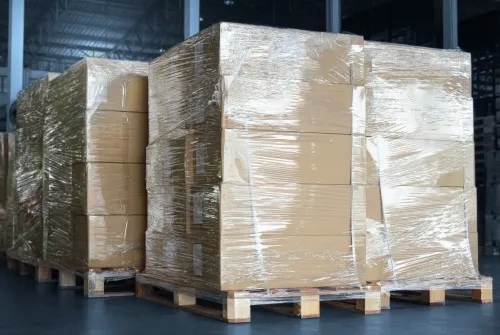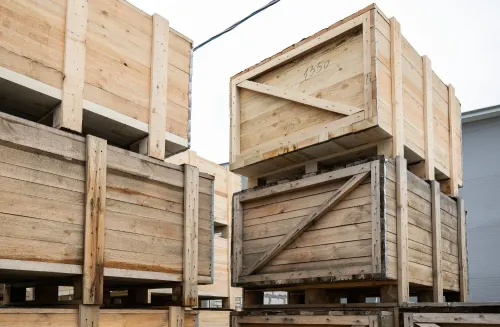
An oversized machine does not automatically require a flat rack or breakbulk shipment. By measuring the packed envelope, checking the real loading restrictions, and redesigning the support system around the machine’s load paths, you can determine whether the cargo can travel in a standard container and where size reduction becomes unsafe.
Key takeaways
- Measure the packed cargo envelope, including skids, covers, lifting gear and lashings.
- Compare transport modes using usable space, door openings, payload and loading direction.
- Reduce volume through detachable protection and compact bracing, never by weakening load paths.
- Complete a loading trial and document the final secured dimensions before terminal delivery.
Choose the transport mode from the packed cargo envelope
Start with the packed cargo envelope, not the bare machine: length, width, height, gross weight, centre of gravity, lifting points and intended loading direction. Skids, cradles, lifting beams, weather covers, bracing and lashings can change the transport decision.
These cargo packaging solutions for oversized loads with limited container space often begin by making the package smaller.
| Option | Use it when | Critical check |
|---|---|---|
| Standard container | The complete package passes through the door aperture and fits internal clearances | Confirm payload, floor-loading pattern and lashing capacity |
| Open-top container | Height exceeds the roof but the cargo can be crane-lifted through the top | Width and length must remain within container limits |
| Flat-rack container | Width, height, length, side-loading or lifting geometry exceeds ordinary container limits | Do not select it solely because the cargo is heavy |
| Platform container | The package cannot be enclosed but can be safely supported on a platform | Engineer bearing points, restraint and handling access |
| Breakbulk or project cargo | Available container equipment cannot safely support or enclose the package | Plan vessel, crane, route and terminal handling as a dedicated movement |
For packaging for outsize machinery, remove accessories, rotate or fold assemblies, or ship supported subassemblies separately when this converts the packed unit into a container-compatible load. A flat rack or platform with overhang can trigger route surveys, special handling, higher quotations and out-of-gauge declarations; measure every projection, including beams and protection, before booking.
A package that cannot be safely lifted, tilted, positioned or lashed remains unsuitable even when its dimensions appear to fit.
Measure usable container space, not nominal internal dimensions
A package fits only if its full loaded envelope passes the container door, internal obstructions, floor limits, and lifting path. Require a dimensioned drawing of the packed unit showing the skid or cradle, timber blocking, moisture barrier, shock protection, lifting beams, corner protection, tie-down hardware, removable covers, and projecting fasteners.
A 40-foot high-cube is commonly specified at about 2,352 mm internal width and 2,698 mm internal height; verify the actual container and door aperture before manufacturing any oversized cargo packaging. Check these constraints:
- Door opening, internal corner posts, roof bows, roof clearance, lashing points, floor condition, gooseneck tunnel, and payload rating
- Machine centre of gravity, lifting points, loaded orientation, tilt risk, and clearance for safe positioning
- Package gross mass against payload and concentrated floor loads; a total mass below payload does not prove that bearing points are acceptable
| Measurement | Record | Consequence |
|---|---|---|
| Package envelope | Length, width, height, covers, beams, fasteners, and overhang | Reveals out-of-gauge exposure |
| Support footprint | Bearing locations and load-spreading members | Identifies excessive concentrated floor load |
| Handling geometry | Lifting points, centre of gravity, sling path, and loaded orientation | Prevents unsafe tilting or door positioning |
Use this dimensional checklist for container space optimization packaging:
- Clearances at the door, roof, sides, and corner posts
- Overhang and gooseneck-tunnel restrictions
- Bearing locations and floor condition
- Final verified gross mass plan, including package and cargo weight
Reduce cubic volume without removing essential protection
Thinner walls rarely solve oversized-load constraints: they reduce protection before they create usable clearance. Container space optimization packaging starts with the package’s handling study, then selects the least bulky format that still resists impact, weather, corrosion, contamination, and unauthorised handling.
| Option | Space-saving approach | New risk to control |
|---|---|---|
| Fully enclosed timber case | Maximum enclosure and stacking protection | Adds wall, roof, and handling clearance |
| Skid or cradle | Removes non-structural panels around the machine | Exposes cargo to impact or weather |
| Bolted base | Uses the machine’s approved mounting points | Transfers force into weak housings if mislocated |
| Steel or timber frame | Shapes support around the narrowest profile | Requires engineered load paths and edge protection |
| Soft-top cover | Protects from rain with less overhead volume | Can trap condensation or obstruct lifting |
| Modular packaging system | Ships detachable sections in designed modules | Poor reassembly or unsupported separation causes damage |
Orient the machine on its strongest, narrowest profile. Fold or detach non-structural accessories, and remove guards only when they do not protect precision surfaces or internal components. Nest compatible parts in designed cavities; put documents and small components in secured voids that leave lashings, ventilation, inspection points, and unloading paths clear.
A sealed vapour barrier blocks moisture exchange; correctly sized desiccant removes moisture already inside the sealed volume. Corrosion inhibitors require compatibility checks with elastomers, electrical insulation, coatings, lubricants, and cleaning procedures. Never shrink packaging by blocking inspection access, exposing machined surfaces, separating assemblies without support, or fitting a cover that traps condensation or obstructs lifting.
This is essential packaging for outsize machinery, not cosmetic cube reduction.
Design the skid and cradle around real load paths
A skid that bears on a gearbox housing or pipe can crack the machine before the first acceleration event. Put blocking under approved mounting feet, base frames, grillages, beams, or engineered load-spreading members; never treat panels, shafts, housings, or unverified castings as lifting or transport supports.
Support and restraint solve different problems:
| Function | Direct load path | Design checks |
|---|---|---|
| Support | Beams, chocks, grillages, and blocking carry weight into the container floor | Crushing, splitting, sliding, pull-out, and the actual bearing pattern |
| Restraint | Lashings hold the machine in tension against movement | Pretension, angle, friction, elongation, edge protection, anchorage capacity, and lashing-point strength |
A heavy machine can remain below the container payload while exceeding its concentrated floor-load limit. Match each bearing member to the floor structure, then test longitudinal, transverse, and vertical transport forces under the IMO/ILO/UNECE Code of Practice for Packing of Cargo Transport Units. A stationary package is not proof against vibration or acceleration.
For oversized cargo packaging and packaging for outsize machinery, require a drawing that shows:
- Approved support points and bearing members
- Lifting zones, centre of gravity, and lashing routes
- Anchorage details and edge protection
- Blocking and chocking locations
- The unloading sequence, including cover removal and access
Ramanand Pack Solution Private Limited can use this review to compare a case, skid, cradle, bolted base, or modular frame against the machine’s lifting and securing plan rather than selecting a package by external dimensions alone.
Validate the shipment before it reaches the terminal
A trial fit or digital clearance review using the selected container’s actual dimensions must pass before the package reaches the terminal. Check the complete oversized cargo packaging, including the skid, cover, blocking, lifting gear and projections—not just the machine.
- Confirm crane capacity, sling configuration, lifting angles, tilt risk, side-loading method, forklift access and reach to every lashing point.
- Keep access panels and inspection marks visible. State how terminal staff remove, fold, protect and re-secure the weather cover without cutting lashings or blocking lifting zones.
- Use ISPM 15-marked heat-treated wood for international crates, skids, blocking and dunnage. Kiln-dried timber without the recognised mark does not demonstrate compliance.
- Record package dimensions, gross mass, centre of gravity, lifting points, securing instructions, photographs and the shipper’s SOLAS verified gross mass submission.
| Check | Confirms | Does not replace |
|---|---|---|
| SOLAS VGM | The packed container’s declared mass before ship loading | Floor-load checks, restraint calculations or a safe packing plan |
| Tilt or shock indicator | Evidence for receiving inspection and claims review | Blocking, bracing or securing against sliding and overturning |
| Lashing-point review | That each restraint can be installed and inspected | A crane plan, forklift route or container clearance review |
These checks are essential to cargo packaging solutions for oversized loads with limited container space: a package that fits on paper can still fail at loading, transshipment or receipt.
Frequently asked questions
How do you choose a transport mode for an oversized load?
Choose from the packed cargo envelope: length, width, height, gross weight, centre of gravity, lifting points and loading direction. Include the skid, cradle, lifting beam, weather cover, bracing and lashings before comparing container, flat-rack, breakbulk or road transport.
Why are nominal container dimensions insufficient for packaging design?
Nominal internal dimensions exclude usable clearances. Check the door opening, corner posts, roof and floor obstructions, lashing points, payload limit, internal height and the space consumed by loading equipment.
How can you reduce cargo volume without losing protection?
Use detachable weather covers, removable handrails, compact bracing and a skid designed around actual support points. Do not remove impact protection, blocking, lifting access or restraint capacity simply to fit the container.
What must be validated before oversized cargo reaches the terminal?
Confirm the final packed dimensions, gross weight, centre of gravity, lifting points, load distribution, tie-down layout, loading sequence and container compatibility. Conduct a loading trial when clearances are tight and record the secured configuration.