A machine can arrive damaged even when its outer crate looks intact: vibration, condensation, poor restraint and repeated lifting each create different failure points. By the end, you will be able to match packaging materials and securing methods to the product, route, climate, handling equipment and storage period.
Key takeaways
- Block the machine against movement before adding cushioning.
- Use VCI or desiccant when moisture threatens bare metal.
- Match crate strength and restraints to route, handling and lifting points.
- Compare packaging designs by protection, weight, cost and packing time.
Where industrial packaging prevents avoidable transit damage
A strong crate cannot prevent transit damage if the machine moves inside it. Industrial packaging solutions must address three separate hazards: shock and vibration, moisture or corrosion, and load restraint.
A Pune-to-customer route can include rough road sections, repeated forklift transfers, port dwell time and sea-air condensation. Blocking, bolting, saddles or internal fixtures must transfer forces through suitable machine load paths; straps over covers, shafts or guards can cause damage while leaving the crate visibly intact.
A sealed barrier bag also fails if the machine is warm or wet, seams are poorly closed, or condensation forms inside. Dry packing, sound seals, suitable desiccant and protected interfaces control that risk.
Use this receiving-site checklist:
- Fit stronger bases where packed mass, centre of gravity or lifting forces could distort a skid.
- Add a moisture barrier and humidity indicator for monsoon exposure, long storage or ocean movement.
- Separate accessories, seal exposed surfaces and protect machined faces, flanges and connectors.
- Mark lifting points and control unpacking so operators do not cut into the machine or unload loose parts first.
These measures reduce impact failures, repair or replacement risk, handling delays and receiving-site rework. They also create cleaner deliveries through sealed surfaces, protected interfaces and predictable unpacking. The trade-off is real: heavier bases, barriers and fixtures increase tare weight, package cube and handling cost, and can reduce container utilisation.
The broader industrial packaging benefits in Pune come from fewer disruption points, not unsupported savings claims.
Which packaging format fits the machine and its exposure
Choose the format by load path and exposure, not appearance: mass, dimensions, centre of gravity, fragility, corrosion sensitivity, lifting points, route, transport mode and storage duration decide the package.
| Option | Primary function | Choose it when |
|---|---|---|
| Wooden crates | Rigid frame and impact protection | Heavy or irregular machinery needs blocking; solid wood requires ISPM 15 treatment and an official mark for international trade |
| Plywood cases | Stable enclosed export shell | You need panel strength without treating the entire case as solid wood |
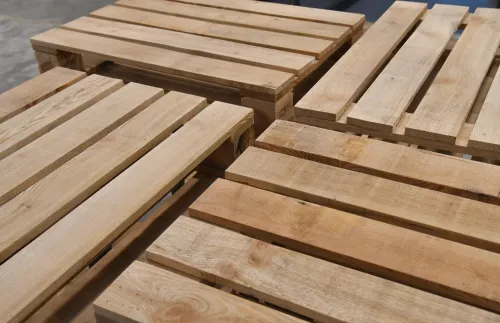
| Pallets | Forkliftable platform | A stable load has defined fork access |
| Skids | Low, heavy-duty base | Low-centre-of-gravity machinery needs forklift or crane handling |
| Corrugated boxes | Light outer carton | Dry, lighter, non-fragile parts travel short distances |
| Foam inserts | Shock isolation and separation | Delicate components need protection from walls or adjacent parts |
| VCI film | Vapour-phase corrosion control | The product, film and enclosure are compatible |
| Desiccant systems | Moisture adsorption | Long storage or sea transit requires controlled humidity |
| Stretch film | Unitisation and dust restraint | Bundled parts need hold-down, not a moisture seal |
| Tarpaulin covers | Splash and dirt shielding | Outdoor handling occurs; it is not a sealed moisture barrier |
For steel, use a barrier bag, compatible VCI where applicable, and desiccant sized from enclosure volume, film moisture-vapour transmission, initial moisture, storage duration and ambient exposure—not machine weight alone. Solid-wood crates, pallets, dunnage and skids need ISPM 15 treatment and marking; plywood and fibreboard are processed wood products.
Engineering product packaging in Pune should record packed mass, lifting points and the complete handling chain.
How to prepare, block and secure machinery before closing the pack
Drain oil, coolant and fuel when the machine, carrier rules or destination requires it. Dry every surface before wrapping; trapped liquid inside a barrier pack promotes corrosion. Then prepare the machine in this order:
1. Lock or pin moving assemblies, including slides, arms, doors, rotors and pendulums. Remove vulnerable projections where transport forces could bend them.
2. Protect shafts, control panels, machined faces and connectors with fitted covers, caps, plugs or cushioning. Cap or wrap exposed flanges without allowing wrapping material to contaminate sealing faces.
3. Bag loose accessories separately, label each bag and secure it to a designated crate location. Never leave tools, bolts or detached guards loose inside the case.
4. Block, bolt, saddle or fixture the machine through structurally suitable load paths. Transfer force into the base frame or approved attachment points, not covers, guards, shafts or fragile housings. Unsupported bases can shift even when the crate remains intact.
5. Add internal bracing, strapping, lashing, edge protection and shock-isolating pads where the route requires them. Attach the base positively to the skid or case floor, and keep straps off control panels, machined surfaces and other fragile areas.
6. Review the packed mass and non-level lifting condition before fabrication. Size forklift pockets, crane lugs, sling clearances and the case base for the complete load, not the machine alone. Mark lifting points, centre of gravity and sling restrictions where operators can see them.
This sequence is central to protective packaging for machinery in Pune, where repeated handling and road vibration expose weak restraints quickly.
How to make the package fit the route and export process
Before fabrication, map the complete route and handling chain; a pack that survives a short Pune road trip may fail during sea freight.
- Record the Pune pickup road surfaces, truck or container loading method, forklift pockets, crane access and packed mass.
- Identify trans-shipment, reach-stacker handling, port dwell time, humid or salt-laden air, ocean movement, destination equipment and final unloading.
- Separate domestic road packaging from export packaging. Export routes need stronger restraint, lifting access, longer storage protection and resistance to sea-air condensation.
- Pack the machine dry inside a suitable moisture-barrier bag. Seal seams and penetrations, place correctly calculated desiccant inside the enclosure, and add a humidity indicator when specified.
- Size desiccant from enclosure volume, barrier-film moisture-vapour transmission, initial moisture, storage duration and ambient exposure—not machine weight. Loose silica-gel sachets alone cannot control a large enclosure reliably.
Use factory packaging solutions in Pune that document the handover: apply the ISPM 15 mark to regulated solid-wood components, assign each package an ID, and provide a packing list with gross and net weights.
Add ISO 780 handling symbols, centre-of-gravity marks, lifting points, sling restrictions and “this side up” instructions where the handling method requires them.
Use ASTM D4169 as a test framework, then select distribution cycles that match the actual vehicle, container movement, handling sequence and hazards. A compression test cannot prove that internal restraint, moisture control or ocean handling is adequate.
How to compare packaging designs before you approve the job
Approve only a design you can audit against drawings, measurements and evidence. For industrial packaging solutions, require the supplier to provide:
- Package drawing, packed dimensions, gross and net mass, material specifications, and inspection photographs.
- Solid-wood treatment details, including the ISPM 15 mark and heat treatment of the wood core to 56°C for 30 continuous minutes.
- Corrosion-control method: dry packing, barrier film, VCI compatibility, desiccant quantity and humidity-indicator location.
- Restraint points, lifting instructions, sling restrictions, forklift access and centre-of-gravity information.
- Agreed acceptance tests, with ASTM D4169 cycles selected for the actual route and handling sequence.
Check that the base carries the machine through structural load paths. Reject a design that loads flanges, control panels, guards or shafts, leaves accessories loose, blocks forklift pockets, or prevents sling access. Confirm that the pack survives pickup, truck loading, container stuffing, trans-shipment, crane lifting and final unloading.
Shock and tilt indicators record handling events; they do not cushion the machine or replace blocking, bracing and cargo securing.
| Compare | Strong evidence | Weak evidence |
|---|---|---|
| Engineering | Route-specific loads, restraints and handling clearances | “Export quality” |
| Repeatability | Standard drawings, packing records and photographs | Verbal instructions |
| Handover | ID, weights, lifting marks and acceptance results | Unlabelled completion |
For engineering product packaging in Pune and factory packaging solutions in Pune, Ramanand Pack Solution Private Limited is worth evaluating against this documented checklist rather than a generic service claim.
Frequently asked questions
Where does industrial packaging prevent avoidable transit damage?
It prevents damage when it stops three hazards: machine movement from shock and vibration, moisture-driven corrosion, and inadequate load restraint during lifting or transport.
Which packaging format fits a machine and its exposure?
Choose a crate, case, skid, barrier system or sealed pack based on machine weight, centre of gravity, fragility, moisture sensitivity, handling method and route exposure.
How should you prepare, block and secure machinery before closing the pack?
Clean and dry the machine, protect exposed surfaces, lock moving parts, support the load at strong points, block it against movement, and verify restraints before closing the pack.
How do you make a package fit the route and export process?
Account for road vibration, port handling, crane or forklift access, stacking, rain, storage duration, container dimensions, lifting points and ISPM 15 requirements for solid-wood packaging.
How should you compare packaging designs before approving the job?
Compare each design’s protection against shock and moisture, total weight, dimensions, material cost, packing and unpacking time, inspection access, reuse potential and export documentation needs.